
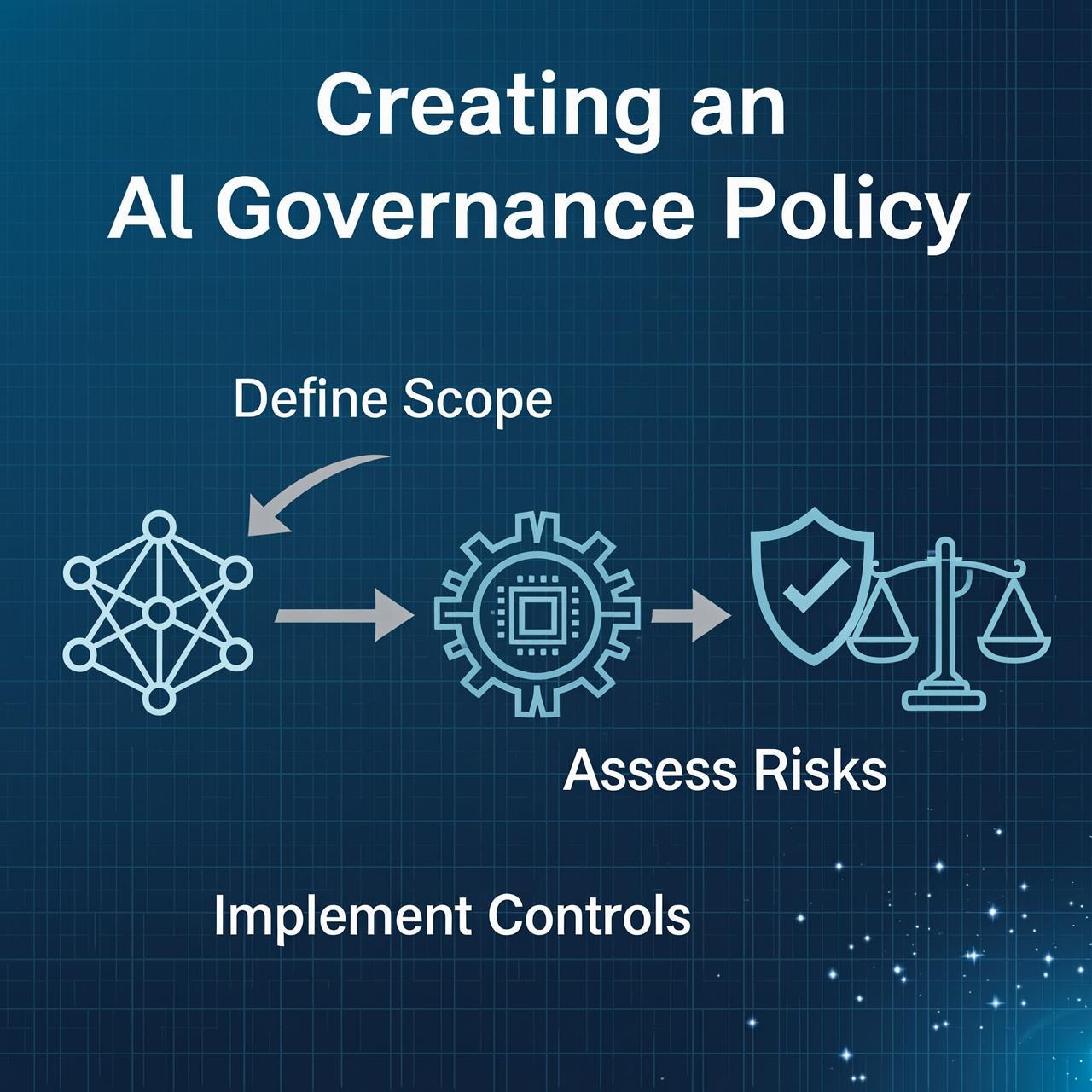
A Glimpse into Ethical AI Governance: Surprising Facts and the Stakes Ahead
Opening Hook: Did You Know? Only 20% of Organizations Have a Formal and Effective AI Governance Framework
Only one in five organizations have a formal ethical ai governance framework in place—a surprisingly low number when artificial intelligence impacts almost every facet of modern business. With new ai technologies transforming how we work, play, and connect, the stakes for responsible leadership have never been higher. Urgent conversations surrounding ai risk, responsible ai, and the coming wave of global regulations bring one fact into sharp focus: the future belongs to those building trust through effective, transparent, and accountable AI practices.

What You’ll Learn About Ethical AI Governance
- The core principles of ethical ai governance
- How to develop an ai governance framework
- Best practices for implementing responsible ai and ai risk management
- The relationship between ethical ai, ai development, and global ai act regulations
- Tools to ensure human oversight in your ai system
Understanding Ethical AI Governance
What is Ethical AI Governance?
Ethical ai governance is about making sure artificial intelligence is used fairly, safely, and with transparency. This means having rules and checks in place so AI doesn’t go off course and always aligns with what’s best for people. It brings together ai ethics, smart decision-making, and responsible ai development, making certain that any ai system supports human values and respects rights.
“Ethical AI governance is the stewardship of artificial intelligence in a manner that aligns with human values, promotes effective ai, mitigates risks, and upholds responsible ai standards.”
As organizations around the globe race to adopt the latest ai technologies, the importance of an ai governance framework can’t be overstated. Good governance helps ensure that AI performs as expected while reducing negative side effects like discrimination, data leaks, or out-of-control automation. Ultimately, ethical ai governance is the foundation for trustworthy ai and long-term innovation.
Why Ethical AI Governance is Crucial to Artificial Intelligence Systems
A strong ethical ai governance system acts as a safety net for businesses and communities. Without proper rules, ai systems can introduce serious challenges—such as spreading bias through poor data quality, invading privacy, or even making decisions that no human would approve. When human oversight is missing, these risks grow quickly, potentially leading to lost trust, fines from regulators, or even public backlash.

Governments across the world now demand clearer ai regulations and a focus on responsible ai. The new European ai act is just one example of rules requiring that companies put risk management, transparency, and accountability first in their ai development processes. It’s not just about checking boxes; strong governance helps organizations turn ai risk into an opportunity for better business, innovation, and social impact.
The Evolution of AI Governance in the Context of the AI Act and Regulation
Regulations like the ai act and frameworks modeled after GDPR have fundamentally changed how organizations approach ai governance. In the past, oversight was often reactive. Now, proactive policies are a requirement. The ai act defines risk categories for ai systems, requires documentation of ai model decision processes, and forces organizations to adopt specific safeguards. Other regions are following suit with legislation tailored to their own societies, creating both challenges and opportunities for those operating internationally.
All these steps combine to give rise to a new era of ethical ai governance—where protecting individuals and building responsible ai are non-negotiable. For businesses, aligning with these standards is not only about compliance; it’s an essential part of earning user trust, avoiding legal trouble, and maintaining a competitive edge as AI technologies evolve.
Key Principles & Pillars of Ethical AI Governance
What are the 4 Pillars of Ethical AI?
Accountability: Ensuring Human Oversight in AI Development
Accountability is about making sure there’s always a person responsible for every decision an ai system makes. With clear human oversight, organizations can avoid “black box” scenarios where no one knows how or why an AI made a certain choice. Keeping humans in the loop helps catch mistakes early, and drives better, safer ai development. Whether a system recommends loans, sorts job applicants, or powers security software, someone must track its results and ensure it aligns with core ai ethics.
Transparency: Building Trust through Open AI Practices
Transparency means opening the curtain on how ai systems work. This involves documenting how data is collected, what the ai model does with it, and how decisions are made. By sharing details openly, organizations allow users and regulators to trust AI processes. Openness also makes it easier for teams to fix mistakes, audit ai models, and comply with changing ai regulations. Put simply, transparent AI is trustworthy AI.

Fairness: Preventing Bias in AI Systems
Fairness requires tackling bias at every step, from training data selection to outcome monitoring. Poor data quality or skewed algorithms can lead to discrimination and unfair treatment. It is essential for organizations to develop clear testing and feedback mechanisms so ai systems do not perpetuate or increase inequalities. Regular bias audits are an important part of a comprehensive ai risk management framework, helping organizations uphold the values of equality and justice at every turn.
Privacy and Data Governance in Artificial Intelligence
Protecting user data is a cornerstone of ethical ai governance. With so much personal information involved in modern ai systems, managing privacy through robust data governance is a top concern. Organizations need policies for data collection, storage, access, and deletion that comply with laws like GDPR and the ai act. Privacy is not just about technical protections—it’s about giving users control over their information and making sure AI respects those boundaries.
What are the 5 Principles of Ethical AI?
- Fairness
- Transparency
- Accountability
- Privacy
- Sustainability

What are the 8 Principles of AI Governance?
- Responsibility
- Accountability
- Transparency
- Fairness
- Human Oversight
- Privacy and Data Governance
- Security
- Societal and Environmental Well-being
Building a Robust AI Governance Framework
Core Components of an AI Governance Framework
- Risk Management and AI Risk Management Frameworks
- Defining AI Ethics and Regulatory Framework
- Clarifying Human Oversight Processes
- Integrating Data Governance Mechanisms
| Elements of Ethical AI Governance Framework | ||
| Framework Component | Importance | Example Practice |
|---|---|---|
| Risk Management | Protects organizations from unintended AI consequences | Adopt an ai risk management framework |
| AI Ethics | Guides responsible behavior and compliance | Develop an ethics board to review ai model use |
| Human Oversight | Prevents unchecked automation and reinforces accountability | Assign human reviewers to critical ai systems |
| Data Governance | Ensures data quality and privacy | Standardize data collection and assess regular data protection |
Aligning Frameworks with the AI Act and Global AI Regulation
Global regulatory momentum, including the ai act, means that governance frameworks must be flexible and responsive to new compliance requirements. Aligning local policies with international ai regulations can be challenging but brings significant benefits: organizations that keep up are less likely to face fines or legal tangles and are more likely to earn consumer trust. Effective ai governance thus means building policies that adapt to overlapping rules and shifting expectations across borders.

Top organizations leverage collaborative policymaking, ongoing compliance training, and robust documentation to stay ahead. Following models set by the ai act—such as mandatory risk assessments, impact reporting, and clearly documented ai model logic—ensures legal alignment and cements a reputation for trustworthy ai.
Ethical AI Governance in Practice: Policies, Processes, and Stakeholder Roles
Developing Organizational Policy for AI System Management
For any organization, building a sound ai governance framework starts with clear internal policies. This involves defining who leads ai development, how decisions are documented, which ethical guidelines apply, and when reviews should take place. Successful artificial intelligence projects involve cross-functional teams—from IT and legal to compliance officers and end-users—to ensure every stakeholder understands both opportunities and risks.
A strong policy balances the need for innovation with the requirement for accountability. This means setting up checkpoints—such as regular audits and performance reviews—so every ai system gets inspected not just before launch, but throughout its entire lifecycle. Incorporating ethical considerations at every stage helps organizations keep pace with new ai regulation and user expectations.
Implementing Human Oversight and Ethical AI Training
Human oversight isn’t just a checkbox—it’s a call to action. Ethical organizations foster a culture where employees feel empowered to challenge questionable AI outputs and intervene when systems underperform. Regular training sessions are key to building awareness about ai risk, ethical dilemmas, and how to properly escalate concerns. With frontline teams understanding the implications of their work, businesses can better manage both technical and ethical risks.
“AI systems are only as responsible as those who design, implement, and monitor them.” – Ethics Thought Leader
Specialized workshops and certification programs keep knowledge up to date, especially as the landscape of ai ethics and ai regulation continues to evolve. Such ongoing education prepares organizations to respond quickly to regulatory changes or to sudden shifts like the rise of new ai technologies.
AI Practices That Enhance Responsible AI Development
- Structured audits to manage AI risk
- Continuous AI systems monitoring
- Documented decision processes for effective AI outcomes
- Engagement with regulatory updates including the AI Act
These responsible ai practices empower organizations to maintain both compliance and agility. By systematically reviewing every ai model, companies can proactively identify bias or unintended effects before they become big problems. This is what sets true responsible ai organizations apart.
AI Risk Management: Approaches and Best Practices
Defining and Classifying AI Risk in AI Governance
Every ai system comes with unique risks. Some may be technical—like a model failing unexpectedly—while others are ethical, such as privacy or fairness concerns. AI risk management involves mapping out where problems might arise and classifying them by how likely and how severe the consequences could be. It’s key to identify potential risks early—this way, mitigation is possible before harm occurs.

Risks are not one-size-fits-all. Some impact only the business (like financial loss), while others reach much wider—think customer safety or damage to public trust. Through thorough risk assessment and categorization, organizations can target their controls and ensure no risk falls through the cracks of their management framework.
Developing and Adapting a Risk Management Framework
- Incident response plans for ethical ai breaches
- Protocols for stakeholder notification
- Metrics for evaluating ongoing compliance
Effective risk management frameworks must adapt as AI systems—and their risks—evolve. That means preparing for both technical glitches and ethical challenges. When an incident does occur, prompt and transparent communication reassures all involved parties that the situation is under control. Regular compliance metrics keep decision-makers informed and allow organizations to demonstrate responsible ai to regulators and users alike.
The Role of Data Governance in Ethical AI Systems
Data governance sits at the core of any ethical ai governance framework. Without clear policies around data quality, protection, and integrity, even the best AI tools won’t behave responsibly. Whether it’s access permissions, consent management, or the use of training data, robust data governance ensures artificial intelligence models only process what’s legal, fair, and appropriate. This prevents non-compliance, reduces bias, and protects organizations from costly data breaches.
| AI Risk Types and Mitigation Strategies | ||
| Risk Category | Potential Consequence | Mitigating Action |
|---|---|---|
| Bias & Discrimination | Unfair outcomes, reputation damage | Conduct bias audits and adjust training data |
| Data Leakage | Loss of user trust, regulatory fines | Regular privacy reviews and encryption |
| Model Drift | Decreased accuracy, unreliable results | Continuous monitoring and model retraining |
| Compliance Breach | Legal penalties, operation disruption | Update policies to reflect latest regulations |
“Proactive risk management is central to ethical ai governance.”
Global Regulatory Landscape for Ethical AI Governance
Key Global AI Regulations: Comparing the AI Act, GDPR, and Other Governance Models
A patchwork of ai regulations is emerging worldwide, each with its own nuances. The EU’s ai act leads with a risk-based approach, requiring rigorous reporting and transparency for high-risk ai systems. GDPR, meanwhile, sets strict requirements for privacy and personal data use, impacting how ai models are trained and monitored. In the US and Asia, guidance is more voluntary or sector-specific but is quickly evolving as lawmakers catch up to technology.

Staying ahead—and compliant—requires organizations to closely track developments, compare requirements, and integrate multiple standards into their ai governance framework. This is especially important for companies operating across borders, where mismatches between governing rules can be a source of both risk and opportunity.
Approach to AI Regulation: Cross-Border Challenges and Opportunities
With different countries introducing unique ai governance demands, organizations must build adaptable frameworks. Cross-border operation means understanding local laws—and recognizing when a single policy won’t suffice. Some regions prioritize privacy, others fairness or transparency. Global businesses must reconcile varied requirements and set a high bar for responsible ai everywhere they operate.
Despite these challenges, a harmonized approach can actually unlock innovation and business partnerships. Companies that get ethical ai governance right become trusted across borders, win clients faster, and can navigate compliance hurdles with less friction. The key is flexibility: policies must be reviewed and revised as new ai act updates, landmark court rulings, or emerging best practices surface.
Human Oversight in AI Governance: Balancing Automation with Responsibility

As ai technologies become more advanced, the need to balance automation with thoughtful human oversight intensifies. Decision-making should never be left entirely to machines, especially in high-stakes fields like healthcare, finance, or hiring. By actively supervising algorithms, humans check for errors, respond to new risks, and ensure that artificial intelligence remains a tool for good.
Practical strategies include having a clear chain of accountability, mandatory review sessions for sensitive ai systems, and periodic retraining of both technology and people. The goal: keep AI as an assistant, not a master. By fostering a culture of alertness rather than complacency, organizations use automation to maximize benefits—always with the safety net of human judgment and ethical reflection intact.
Case Studies: Ethical AI in Action Across Industries
In healthcare, strong ethical ai governance helps ensure diagnosis-support AI tools don’t reinforce old biases or reveal sensitive health data without patient consent. Financial services use risk management checks to prevent AI-driven loan approvals from quietly excluding certain demographics. In e-commerce and retail, regular audits help spot recommendation algorithms that might miss the mark or cross customer privacy lines. These industries demonstrate that a robust ai governance framework makes a real difference in how breakthrough technology supports, rather than undermines, user trust and fairness.
Each of these sectors benefits from embedding human oversight deep into their AI practices. When problems arise, they are caught quickly, addressed transparently, and used as learning experiences for continual improvement.
Best Practices for Empowering Human Oversight over AI Systems
Empowering oversight starts with clear rules and ongoing training. Regular workshops and scenario-based drills help staff anticipate and respond to issues fast. Establishing an “ethics champion” in every team ensures meaningful accountability. Most importantly, organizations promote communication between technical and non-technical staff so concerns can be raised and resolved before AI-related risks spill over.
Best-in-class organizations also invest in user-friendly reporting tools, making it simple for internal and external stakeholders to raise flags if an ai system seems off course. By prioritizing transparency and responsiveness, teams create a culture where everyone feels responsible for the outcome.
Effective AI Governance for Long-term Success

Continuous Learning and Ethical Adaptation
AI is always changing, so policies must evolve too. This means organizations must regularly review their frameworks, learn from mistakes, and stay on top of new guidance—whether from regulators or industry trends. Encouraging a “learning mindset” makes ethical ai governance a living process, not a one-time task.
Leveraging Technology for Responsible AI
Smart use of technology—such as monitoring dashboards, automated compliance checks, and transparent audit logs—makes overseeing ai systems easier and more effective. By deploying the right tools, organizations can strengthen their risk management, spot problems before they escalate, and support responsible, compliant ai development at scale.
People Also Ask: Ethical AI Governance
What is ethical AI governance?
Clear Explanation of Ethical AI Governance and its Pillars in Modern Artificial Intelligence
Ethical ai governance is a policy-driven approach to managing AI so that it is safe, fair, and transparent. Its key pillars—like accountability, transparency, fairness, and privacy—help guide how artificial intelligence works for people, not against them.
What are the 4 pillars of ethical AI?
Defining the Four Pillars: Accountability, Transparency, Fairness, and Privacy
The four pillars of ethical ai governance are accountability (keeping humans in control), transparency (openness about how AI works), fairness (preventing bias), and privacy (protecting people’s data).
What are the 5 principles of ethical AI?
Describing the Five Principles: Fairness, Transparency, Accountability, Privacy, and Sustainability
Alongside fairness, transparency, accountability, and privacy, sustainability is now recognized as a fifth principle. It means AI should also consider environmental impacts and long-term social effects.
What are the 8 principles of AI governance?
Describing the Eight Principles: Responsibility, Accountability, Transparency, Fairness, Human Oversight, Privacy and Data Governance, Security, and Societal Good
The eight principles of ai governance combine everything needed—responsibility, accountability, transparency and fairness, plus human oversight and attention to privacy, security, and societal impact. Following these prevents unforeseen risks and builds lasting trust in ai systems.
Frequently Asked Questions About Ethical AI Governance
How can organizations ensure compliance with global ethical AI regulations?
Organizations can ensure compliance by aligning their ai governance framework with major regulations such as the ai act and GDPR, conducting regular audits, providing employee training, and keeping documentation updated. Cross-department collaboration ensures faster adaptation to new regulatory requirements and keeps artificial intelligence systems within legal and ethical lines.
What are the common challenges in implementing ethical AI governance?
Common challenges include balancing innovation with oversight, managing conflicting global ai regulations, avoiding unintended bias, and ensuring consistent human oversight. Additional difficulties come from rapid technology changes, lack of awareness, and the complexity of updating policies to reflect new risks or laws.
How does ethical AI governance impact AI system performance and human oversight?
Strong governance improves ai system performance by clarifying roles, reducing errors, and supporting early detection of issues. It ensures that people—not algorithms—remain ultimately responsible for impactful decisions. This protects organizations from both technical failures and ethical lapses.
Key Takeaways: Building Ethical AI Governance with Veracity Ai LLC
- A structured ethical ai governance approach ensures trust and accountability.
- Align ai governance frameworks with global regulations like the AI Act.
- Human oversight and continuous risk management are essential.
- Partner with leaders like Veracity Ai LLC for compliant, effective artificial intelligence and responsible ai strategies.
Start Your Ethical AI Governance Journey with Veracity Ai LLC
Ready to put ethical ai governance at the heart of your organization’s success? Contact Veracity Ai LLC to access expert guidance, proven frameworks, and reliable tools that help you stay ahead in the fast-changing world of artificial intelligence.
Leave a Reply